Members of Romsey Archway u3a recently had the opportunity to explore one of Hampshire’s most impressive Victorian fortifications – Fort Nelson, high on Portsdown Hill overlooking Portsmouth.
The visit, arranged by Janet Robinson, was particularly special because it coincided with Heritage Open Days, giving our group the rare opportunity to venture into the West Tunnel, an area of the fort normally closed to the public.
Why Was Fort Nelson Built
Fort Nelson was constructed between 1862 and 1872 as part of a chain of powerful forts built along Portsdown Hill to defend Portsmouth and its strategically important Royal Naval Dockyard
.During the 1850s and 1860s, there was considerable concern about the growing military strength of France. New steam-powered warships and increasingly powerful long-range artillery raised the possibility that an invading army could land elsewhere on the south coast, capture Portsdown Hill and bombard Portsmouth from above.
The government’s response was a huge programme of new fortifications championed by Prime Minister Lord Palmerston. Fort Nelson was one of five forts along the ridge, designed to protect Portsmouth from an attack from the land rather than from the sea – which explains why its main defences face inland.
Ironically, by the time the forts were completed, the perceived threat from France had largely disappeared. They were never called upon to repel an invasion and consequently acquired the rather unkind nickname “Palmerston’s Follies.”
From Victorian fortress to two World Wars
Although Fort Nelson never fired its guns against the invasion it was built to prevent, it did have important later military uses.
During the First World War, the fort was used as a barracks and holding base for soldiers awaiting deployment to the front. During the Second World War, it became an important ammunition store supplying anti-aircraft guns protecting the south coast.
After the war, the fort gradually fell out of military use and was eventually abandoned during the 1960s. It was subsequently acquired by Hampshire County Council and extensively restored. Today it is part of the Royal Armouries and houses the national collection of artillery, with hundreds of pieces covering some 600 years of history
Into the West Tunnel
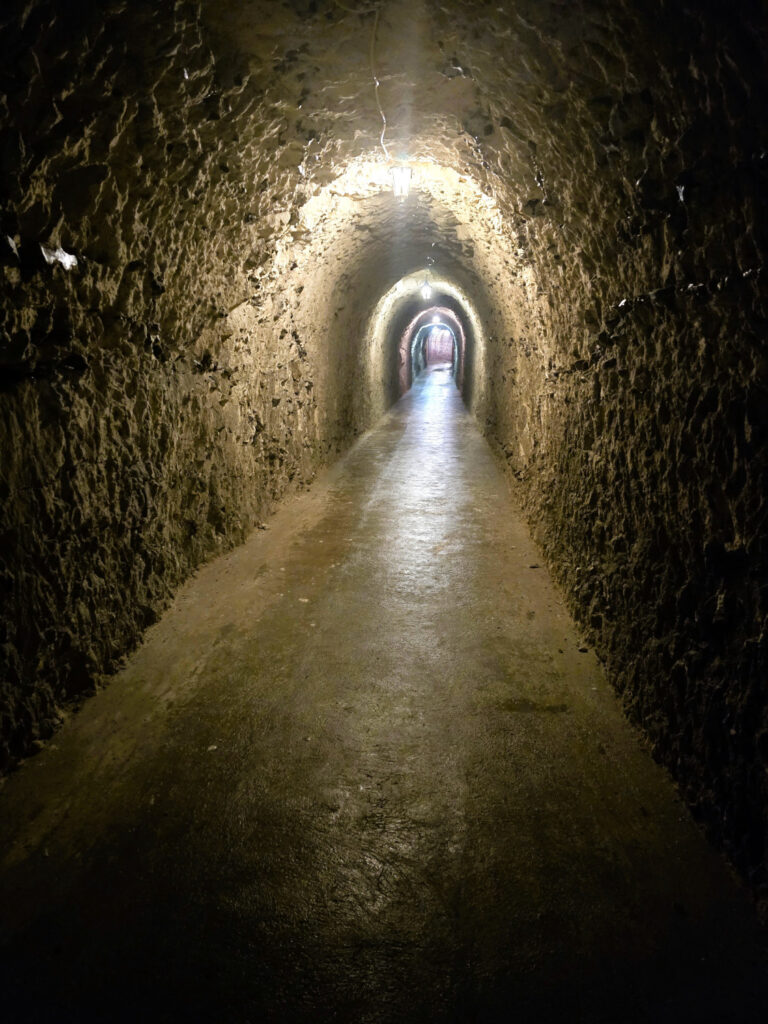
For our group, one of the highlights was undoubtedly the chance to explore the West Tunnel.
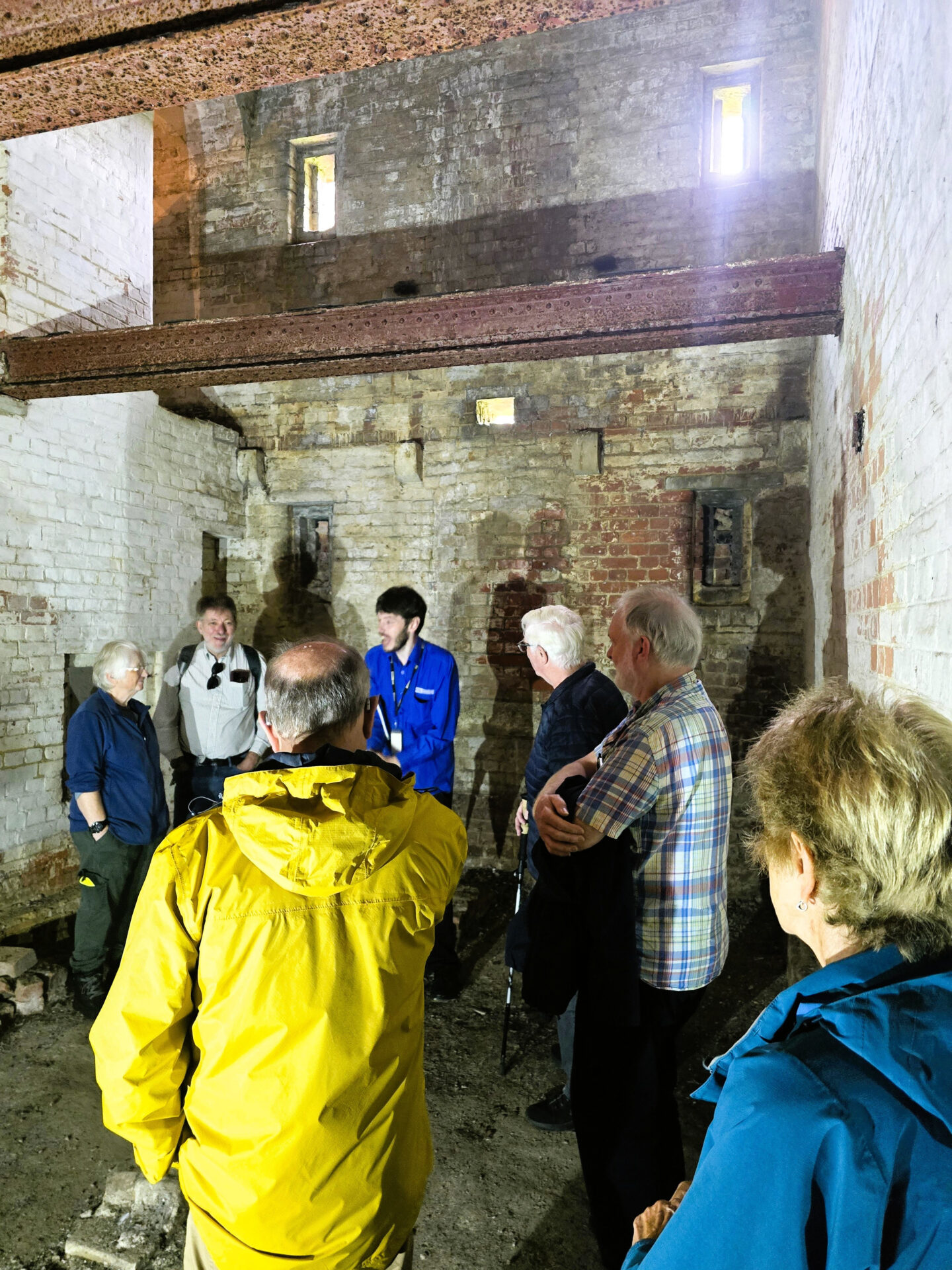
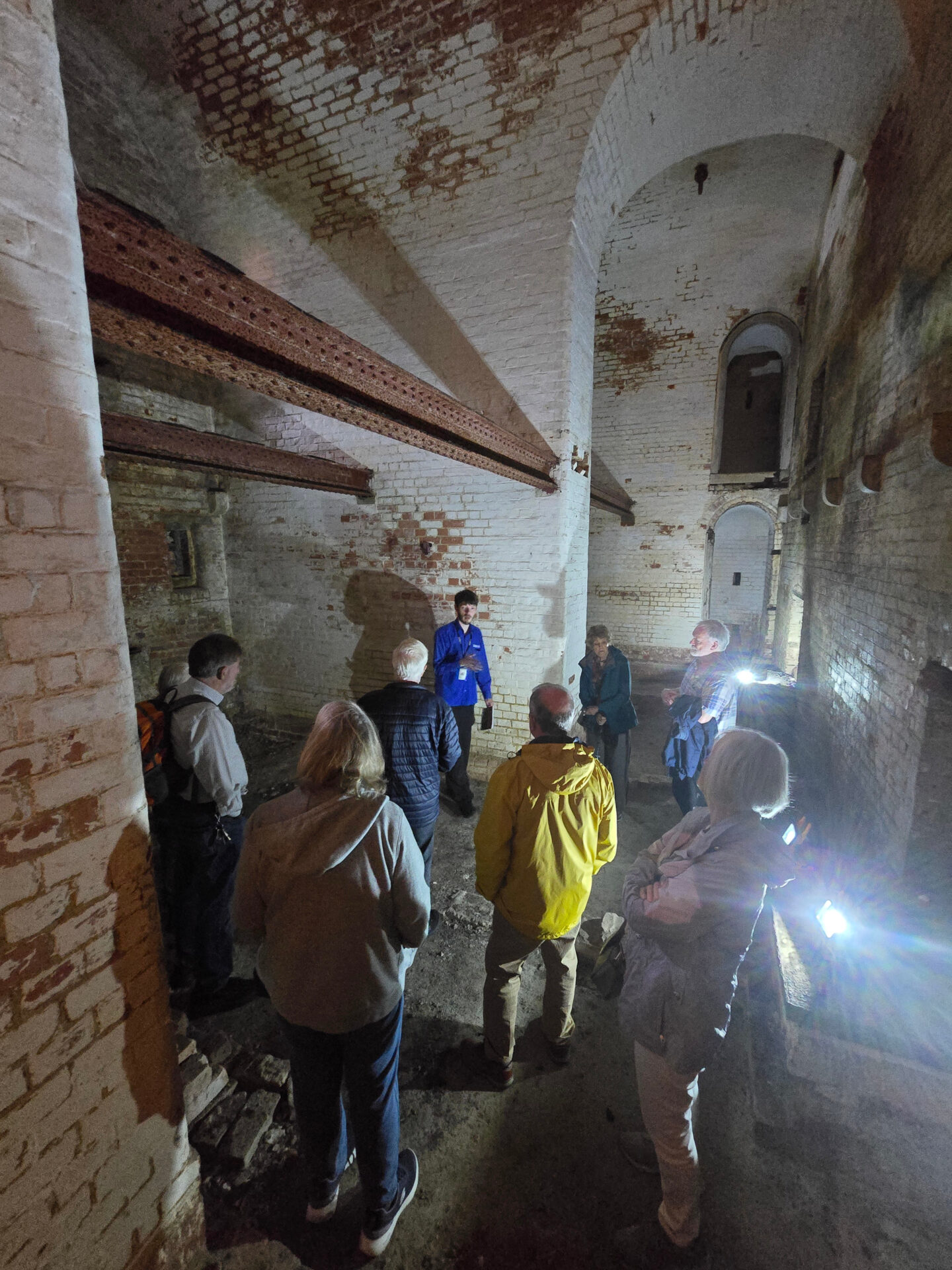
This part of Fort Nelson is not normally open to visitors, but special guided tours were offered on 12 and 13 September 2026 as part of the national Heritage Open Days festival. Each tour was limited to just 12 people.
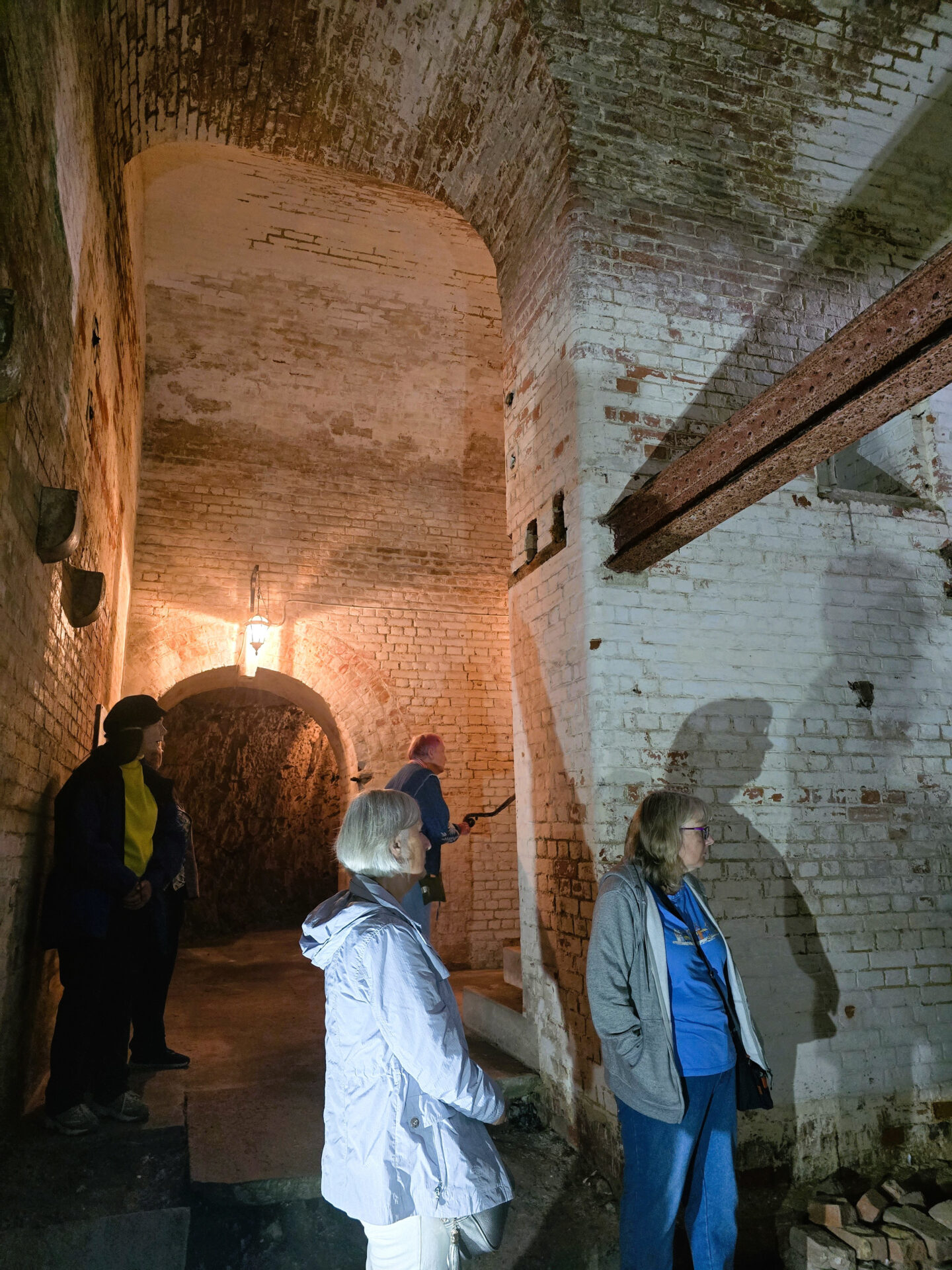
Unlike the more extensively restored public areas of the fort, parts of the West Tunnel retain something of their original character. The floor becomes uneven towards its far end, and some sections remain unrestored, giving visitors a much stronger impression of what these underground spaces must once have been like.
The tunnel also has an interesting wartime history. Records associated with previous Heritage Open Days at the fort note that the West Tunnel was used as barrack accommodation for soldiers during the First World War, and that original features, including parts of the old floor, survive.
Walking through the cool, enclosed passageways made it considerably easier to imagine the fort as a working military establishment rather than simply the museum we see today.
Fort Nelson today
Fort Nelson is now regarded as one of the finest surviving examples of a Victorian defensive fort. Spread across some 19 acres, its tunnels, ramparts, gun positions and underground chambers provide a fascinating reminder of the enormous effort Britain once devoted to defending Portsmouth.
It is also home to some extraordinary artillery, ranging from a huge 15th-century Turkish bombard to a 200-tonne railway howitzer and part of Saddam Hussein’s infamous “Big Babylon” supergun project
Our thanks go to Janet Robinson for arranging the visit, and to Heritage Open Days and the Royal Armouries for providing the unusual opportunity to see part of Fort Nelson that most visitors never get to experience.
For those of us who descended into the West Tunnel, it provided a fascinating glimpse behind the scenes – and beneath the surface – of a remarkable piece of Hampshire’s military history.
Thanks to Dave Green for the images. Please note that some of the text was produced using AI, but has been reviewed by members before publishing.