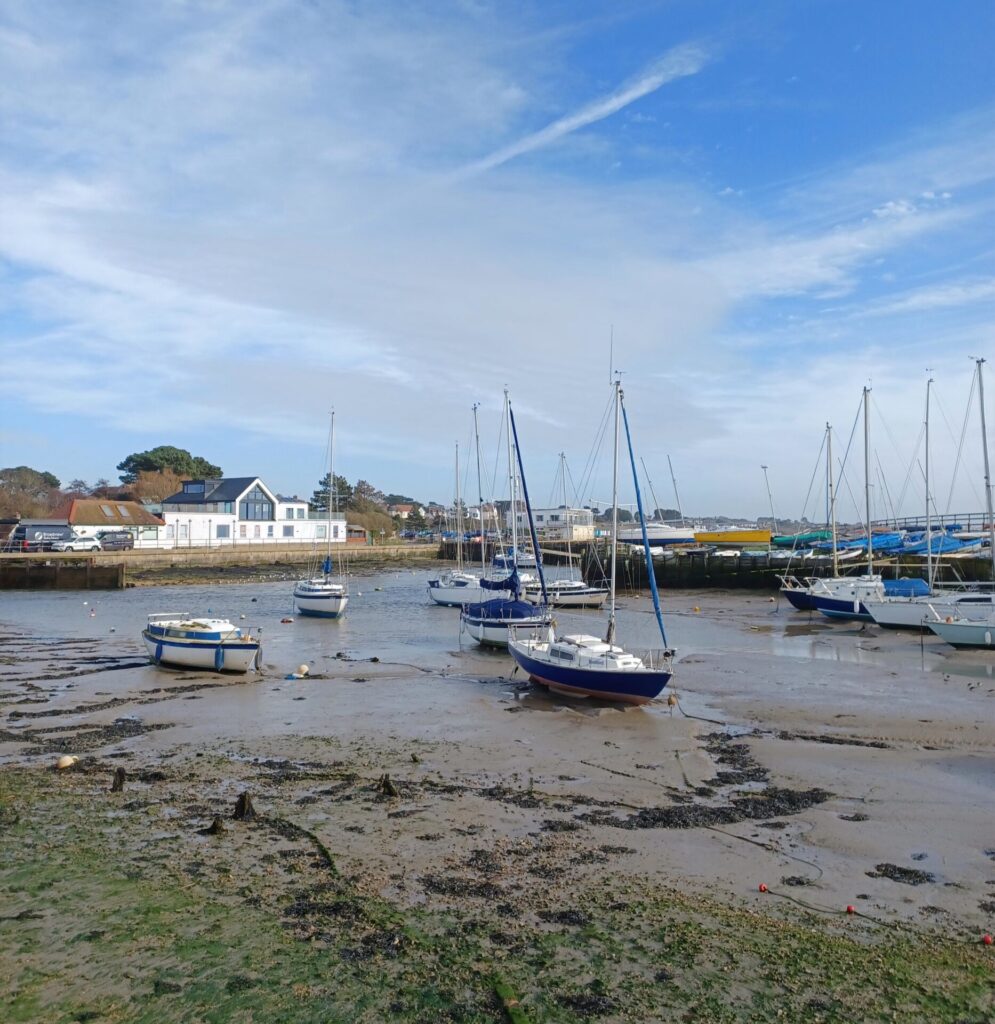
After previous traffic-delayed attempts to get to Titchfield Haven our journeys went smoothly, with everyone assembled on the sea wall by 10:00 sharp, scanning the beach as waders came in on the receding tide.
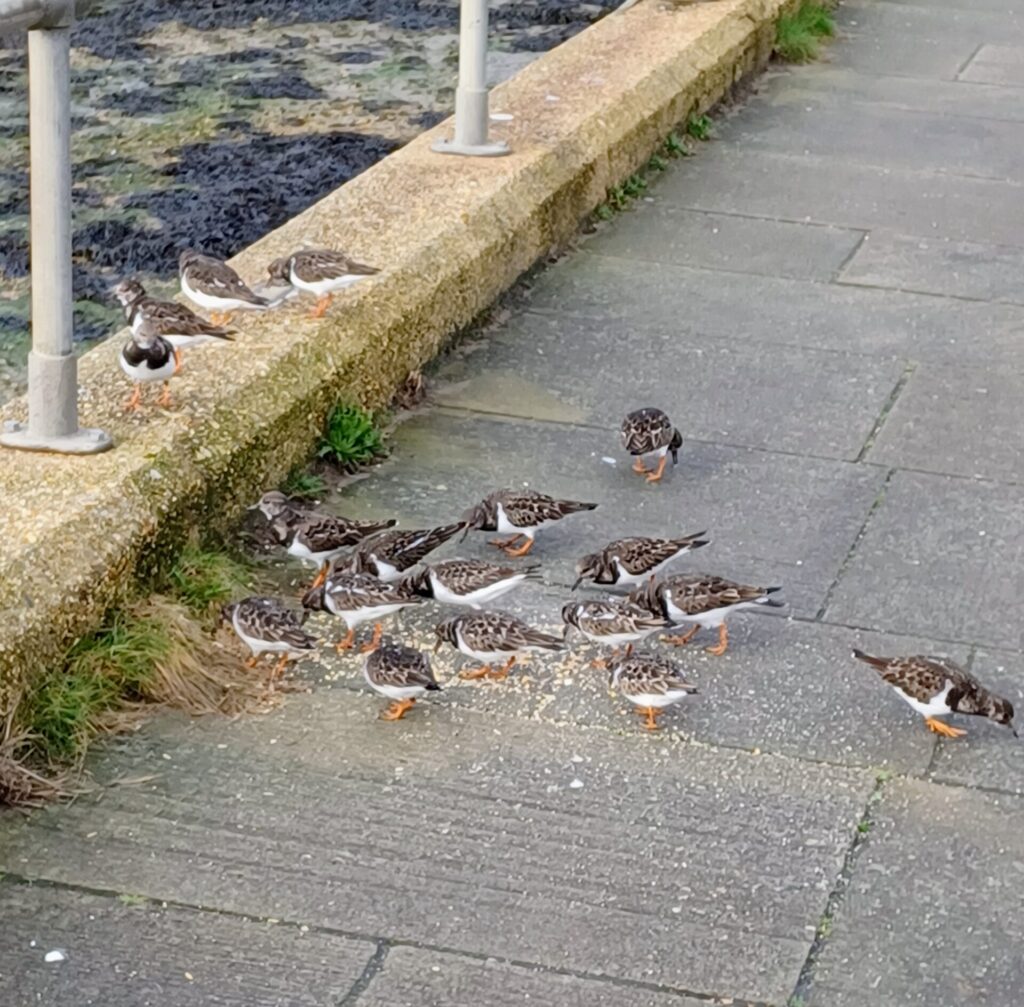
Turnstones were present in good numbers, beautifully camouflaged against the seaweed. It’s always a small miracle how something so boldly patterned can vanish in plain sight. Flooding on the west side of the reserve had concentrated birds elsewhere near the Meadow Hide, giving us pleasing views of gadwall, lapwing, greylag and Canada geese, alongside curlew, oystercatcher and a smart Mediterranean gull.
The highlight at the Knight’s Bank Hide was a marsh harrier drifting over the reserve, instantly sending starlings and plovers skyward. Lapwing wheeled and flashed in the sunlight, their acrobatic flight a spectacular response to the harrier’s effortless patrol, quartering the water with calm authority. It was wild theatre, unscripted and utterly absorbing. Later, we were treated to the rare sight of the harrier bathing at the water’s edge — a fascinating glimpse into the daily maintenance routine of this impressive predator.
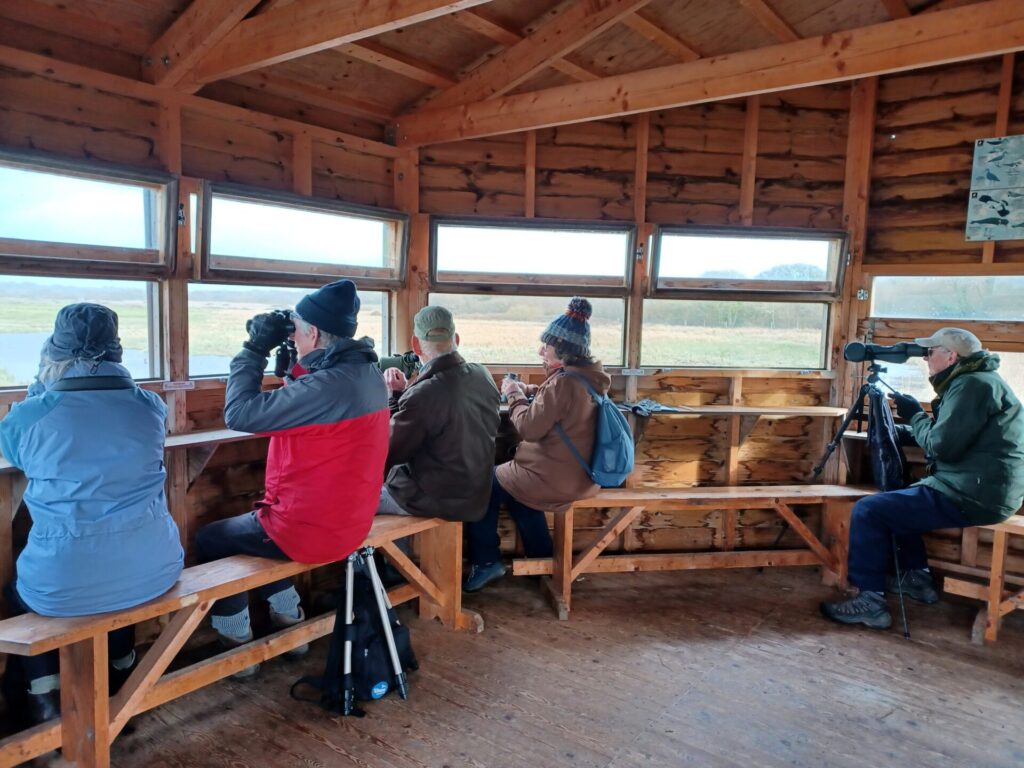
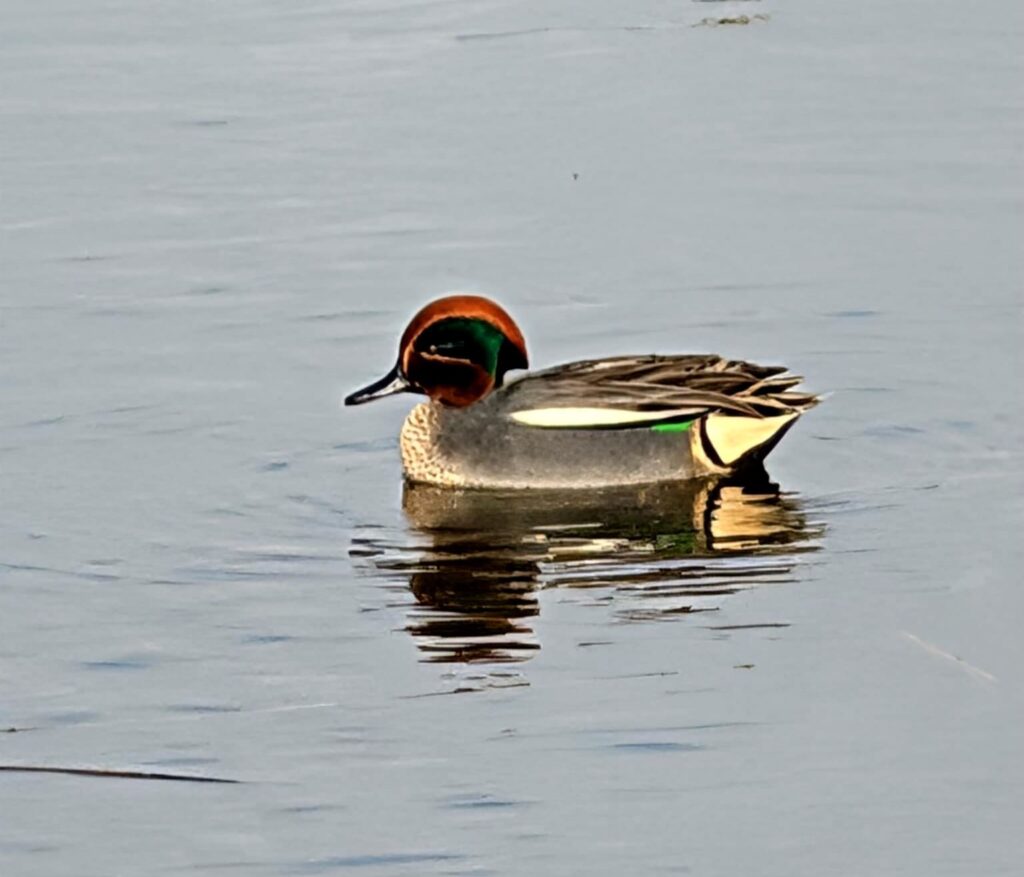
Although the scrapes at the Meon Hide were still flooded, we enjoyed a fine selection of wildfowl instead: teal, shoveler, wigeon and mallard all looking splendid as spring approaches. A particularly fluffy little grebe zipped energetically across the water, as if a tiny outboard motor was hidden beneath his feathers.
We finished along the shoreline, where lively sanderlings chased the retreating tide, while a lone eider, surrounded by great black-backed gulls, appeared to preside over proceedings like a gangland boss attended by his loyal minders.
With 40 species recorded, no rain, and plenty of shared enjoyment, it was a great trip.